
Photo Credit: by magnific.com
GLP1 medications have changed the weight-loss landscape and helped millions lose weight, but are they right for everyone? This article will summarize how these medications work, who is a good candidate, and who should avoid them.
The facts:
* These medications started as specialized diabetes treatments but are now being used for weight loss as a result of the reduced appetite they induce
* They work with satiety signals your body already uses and communicates between your gut, pancreas, and brain to help regulate blood sugar and appetite.
How Exactly Do They Work?
GLP-1 stands for Glucagon-Like Peptide-1. This is not to be confused with Glucagon, a hormone made in the gut and released when you have not eaten and your body needs to tap into additional fuel sources. Glucagon-like peptide, however, has a similar structure to glucagon (hence the name), but its function is very different.
Glucagon-like Peptide 1:
* Supports insulin release when blood sugar rises
* Slows down food transit in the stomach/lower Intestines
* Activates specific brain signals that suppress appetite
Your gut cells produce GLP-1 naturally after consuming certain foods (fiber-rich plants and legumes).
The Process: Fiber, Microbes, and Natural GLP-1 production
* Gut bacteria feed and ferment dietary fibers
* The fermentation process produces products called short-chain fatty acids
* These fatty acids trigger gut cells to release natural GLP-1’s into your system that affect satiety
* Fiber MATTERS! It supports the beneficial microbes in your microbiome, which influence some of the same gut-hormone signals involved in appetite regulation
* Diet and gut microbes stimulate production of your body’s natural GLP-1 and PYY signals. PYY signal pathways slow gastric emptying and send satiety signals to the brain
The Natural GLP1 PATHWAY:
1. Gut bacteria consume fermentable fiber and resistant starch
2. Gut microbial fermentation process occurs
3. This leads to the production of acetate, propionate, and butyrate, known as short-chain fatty acids
4. Short-chain fatty acids affect signaling on intestinal L cells
5. These signals lead to GLP-1 activation and PYY release
6. Gut-to-brain fullness signaling occurs
The Challenge of the Natural Pathway
Depending on how much fiber you eat, natural GLP-1s don't stay active long and are broken down by stomach acid and enzymes in the body. If you don't consume enough fiber to ferment, GLP-1 production stays low.
GLP-1 medications were designed to make GLP-1 effects last longer. They resist rapid breakdown and keep GLP-1 receptors activated longer. Once those receptors are activated, they trigger internal cell signals that affect insulin release, appetite, and digestion. In essence, these medicines turn up the volume on a system your body already has.
GLP-1 and PYY together are a powerhouse:
When needed, diet and medication can work best together for a synergistic effect. Fiber supports the body’s natural gut-hormone system, while prescription medications act directly on specific hormone receptors to extend the effects.
Types of GLP-1–based medicines
Not all “GLP-1s” are the same. They differ in which receptors they activate, how they are given, how often they are taken, and what they are approved to treat. Historically, when given orally, they break down more easily in stomach acid and enzymes and do not have a prolonged satiety effect.
GLP1 agonist: Semaglutide
Activates GLP1 receptors
Dual agonist: Tirzepatide
Tirzepatide activates both GIP and GLP-1 receptors. GIP, or glucose-dependent insulinotropic polypeptide, is another hormone released in response to nutrients.
In clinical trials, this dual action has produced substantial effects on blood-sugar control and weight management. Tirzepatide is taken as a weekly injection.
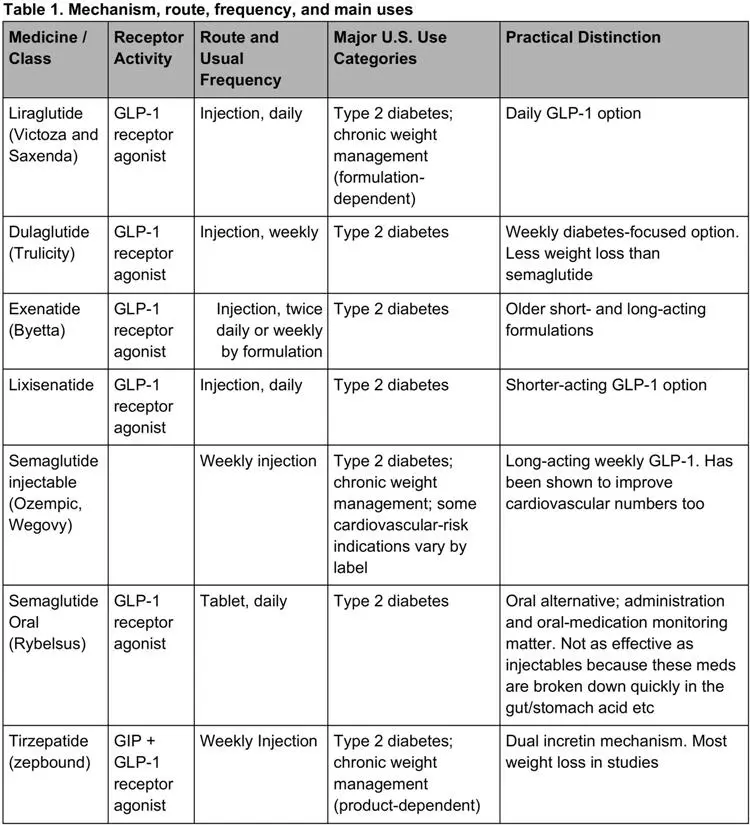
Photo Credit: GLP1-Table1, by @CPOhealth
THE GOOD:
Weight Loss- We know that weight loss produces many benefits, including decreased risk of diabetes, lower BP, decreased inflammation, and lower cancer risk.
Heart Health outcomes
In the SELECT trial, non diabetic adults with established cardiovascular disease who were overweight or obese (BMI over 25) and received semaglutide 2.5 mgs weekly over 3 years had a 20% lower risk of cardiovascular death, nonfatal heart attack, or nonfatal stroke than those who received placebo.
THE BAD:
Short-term side effects:
1. Nausea, vomiting
2. Diarrhea
3. Delayed gastric emptying and constipation. Digestive side effects are common, especially when treatment begins or the dose increases.
4. Abdominal pain/pancreatitis
5. Gout
6. Eye complications (Ischemic optic neuropathy): low incidence, but it can happen, and caution should be taken in people with diabetes who are already more prone to eye complications since they may have pre-existing diabetes-related eye problems
Long-term complications
1. Cancer risk- Mouse studies showed an increased risk with long-term use (1-3 years) and thyroid cancer. Some products carry warnings about thyroid C-cell tumors seen in animal studies. They are contraindicated in people with certain thyroid cancer histories or syndromes. GLP-1 Receptor Agonists and the Thyroid: C-Cell Effects in Mice Are Mediated via the GLP-1 Receptor and not Associated with RET Activation - PMC
Some argue that mice have more GLP-1 receptors on their thyroid cells, which is why they are at higher risk; however, a French case-analysis study published in 2023 showed that long-term use (1-3 years) of GLP-1 medications increases the risk of thyroid cancer in humans. GLP-1 Receptor Agonists and the Risk of Thyroid Cancer | Diabetes Care
2. Sarcopenia ( muscle loss): This might be the biggest risk because the effects are not felt immediately. It is crucial to maintain muscle mass, especially in those over 50, since muscle is harder to build as you get older. Routine exercise and weight-lifting regimens are strongly advised when taking these medications. Muscle mass is directly related to lifespan in those over 65, and a major indicator of nursing home placement in this age group is muscle mass and lower-body strength. Once you lose muscle, it’s an uphill battle to regain.
3. Weight gain: Two-thirds of patients gain weight back within 2 years of stopping meds, which is another reason it is crucial to initiate dietary lifestyle changes while on these medications.
4. Gastroparesis: Uncommon (less than 1%), but again, if in those already prone to constipation or diabetics who are at risk of gastroparesis, the likelihood increases.
Medication interactions:
GLP-1 medicines can delay gastric emptying. This may change the timing or extent of absorption of some oral medicines, particularly when treatment starts or the dose increases.
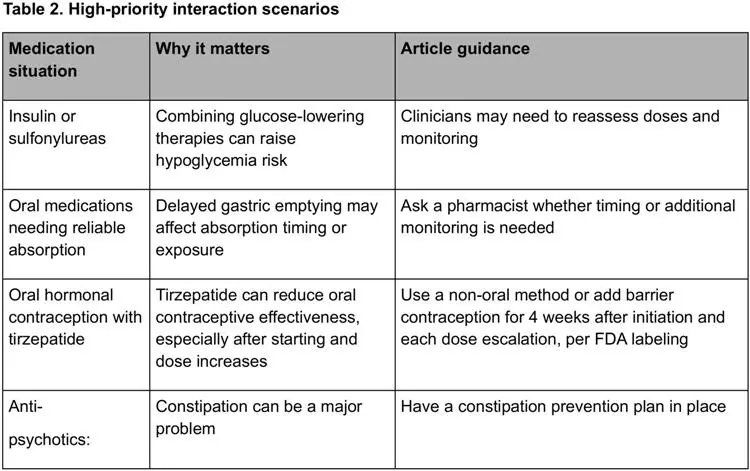
Photo Credit: GLP1-Table2, by @CPOHealth
BOTTOM LINE:
* Great for weight loss in individuals who have comorbidities, a BMI over 25, or diabetes that need better glucose control.
* Short-term use is best (in my opinion) coupled with dietary changes including increased plant-based fibers/legumes (25-30 grams daily) to avoid complications. Many clinicians recommend that their patients continue for life; I do not. I use these medications as an extra tool along with dietary changes to avoid long-term complication risks such as sarcopenia and thyroid cancer. Fiber and protein intake are important, and I would argue fiber is perhaps more important because it stimulates your body’s natural GLP1 production. Protein intake should be roughly 0.8 mg/kg body weight
* Slow weight loss is crucial to avoid Sarcopenia. Always weigh the risks vs. benefits when starting these medications. They are not for everyone.
* Monitor and take precautions for gastric side effects such as slow motility and constipation, and take preventive measures to avoid these, including adequate hydration.
Specific options available through Canada Pharmacy Online include:
* Oral semaglutide (Rybelsus):
* Injectable semaglutide (Ozempic):
* Injectable semaglutide for weight management (Wegovy):
* Injectable dulaglutide (Trulicity):
Always consult with your doctor before starting any medication, and this article is for educational purposes only.
###
Your email address will not be published. Required fields are marked with *.