Photo Credit: by Michelle Leman, Pexels.com
Digestive conditions such as irritable bowel syndrome with diarrhea (IBS-D) and small intestinal bacterial overgrowth (SIBO) can be frustrating to manage. When your healthcare provider prescribes an antibiotic like Xifaxan (rifaximin), it’s natural to wonder how it compares to more familiar antibiotics like amoxicillin or ciprofloxacin (Cipro).
Unlike most antibiotics, Xifaxan works almost exclusively within the digestive tract rather than circulating throughout the body. That unique characteristic makes it an important treatment option for certain gastrointestinal conditions while also changing its side effect profile and its impact on the gut microbiome.
Here’s what you should know about Xifaxan versus traditional antibiotics.
What Makes Xifaxan (Rifaximin) Different from Traditional Antibiotics?
Whether generic or brand name, most antibiotics are systemic medications, meaning they’re absorbed into the bloodstream and travel throughout the body. This allows them to treat infections in the lungs, urinary tract, skin, throat, and other tissues.
Xifaxan works differently. Its active ingredient, rifaximin, is minimally absorbed into the bloodstream. Instead, it stays primarily within the gastrointestinal tract, where it acts directly on bacteria in the intestines.
A helpful way to think about the difference is this:
* Traditional antibiotics work throughout the entire body.
* Xifaxan is designed to work primarily where digestive symptoms originate: in the intestines.
This localized activity is one reason healthcare providers prescribe Xifaxan for specific gastrointestinal disorders rather than common bacterial infections.
Xifaxan vs. Traditional Antibiotics at a Glance
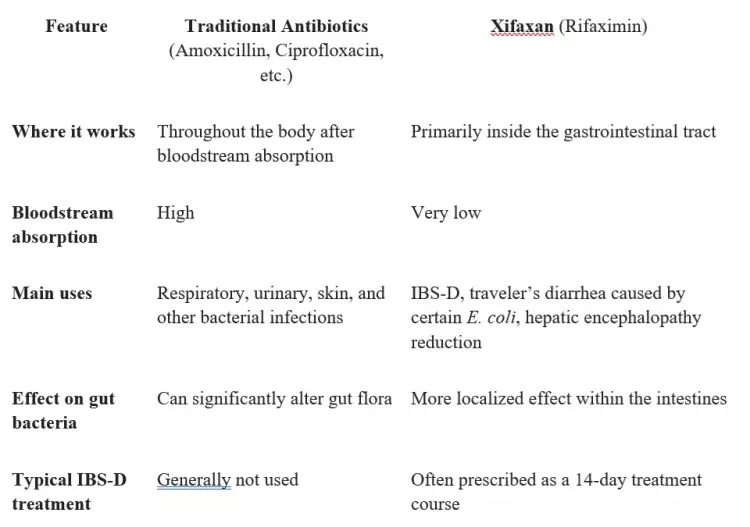
Photo Credit: by @CPOHealth
How Xifaxan Treats SIBO and IBS-D
Xifaxan for IBS-D
The U.S. Food and Drug Administration (FDA) has approved Xifaxan to treat adults with irritable bowel syndrome with diarrhea (IBS-D). Although researchers don’t believe IBS-D is caused by a single bacterial infection, evidence suggests that changes in the gut microbiome and bacterial activity may contribute to symptoms such as:
* Frequent diarrhea
* Bloating
* Abdominal pain
* Excess gas
* Urgency
Xifaxan works by reducing certain intestinal bacteria that may contribute to these symptoms, helping many patients experience symptom relief that continues even after the medication has been completed.
As American Family Physician puts it, “Rifaximin (Xifaxan) is an oral antibiotic previously marketed for the treatment of traveler's diarrhea and hepatic encephalopathy. It is now also labeled for the treatment of irritable bowel syndrome (IBS) with diarrhea.1 Rifaximin has activity against anaerobic, gram-positive, and gram-negative bacteria, including Clostridium difficile. It is not systemically absorbed and is active only in the gastrointestinal tract. It may work by reducing bacterial byproducts and altering intestinal microbiota.”
Xifaxan for SIBO
Although Xifaxan for SIBO is considered an off-label use in the United States, it is commonly prescribed by gastroenterologists because research supports its effectiveness in many patients.
SIBO occurs when excessive bacteria grow in the small intestine, leading to symptoms that may include:
* Persistent bloating
* Gas
* Abdominal discomfort
* Diarrhea
* Nutrient absorption problems
According to Verywell Health, “Antibiotics are the main treatment for SIBO, helping to reduce bacterial overgrowth in the small intestine. They may also decrease inflammation in the intestinal lining, which can improve malabsorption problems.”
Because rifaximin remains largely within the digestive tract, it can reduce bacterial overgrowth without exposing the rest of the body to significant antibiotic concentrations.
Does Xifaxan Kill Good Gut Bacteria?
One of the most common questions patients ask is: “Does Xifaxan kill good gut bacteria?”
The answer is more nuanced than with traditional antibiotics. Systemic antibiotics often produce broad changes throughout the intestinal microbiome because they circulate through the body and can affect many different bacterial populations.
Mayo Clinic explains, “Rifaximin is an antibiotic that works by killing the bacteria and preventing its growth. However, this medicine will not work for colds, flu, or other virus infections.”
Xifaxan’s localized activity appears to produce less widespread disruption than many systemic antibiotics. Some research suggests it may help restore a healthier balance of intestinal bacteria rather than causing extensive microbiome depletion.
However, like any antibiotic, Xifaxan can still change bacterial populations within the digestive tract. Researchers continue studying exactly how rifaximin influences the microbiome over the long term.
Xifaxan Side Effects vs. Amoxicillin or Ciprofloxacin
Every medication has potential side effects, but because Xifaxan stays primarily in the intestines, its side effect profile differs somewhat from many traditional antibiotics.
Common Xifaxan side effects
Some patients may experience:
* Nausea
* Headache
* Abdominal pain
* Gas
* Constipation
* Swelling in the hands or feet (less common)
Most side effects are mild and temporary, though patients should always report concerning symptoms to their healthcare provider.
Traditional antibiotic side effects
Depending on the medication, systemic antibiotics may cause:
* Nausea and vomiting
* Diarrhea
* Yeast infections
* Oral thrush
* Drug interactions
* Sun sensitivity (with certain antibiotics)
* Tendon problems (fluoroquinolones such as ciprofloxacin)
Because they affect bacteria throughout the body, systemic antibiotics may also have broader effects on normal bacterial populations.
What about C. difficile infection?
Nearly all antibiotics carry some risk of Clostridioides difficile (C. diff) infection because antibiotics can disrupt the normal balance of bacteria in the colon.
The CDC explains, “While C. diff infection can affect anyone, most cases occur while or soon after taking antibiotics. People are up to 10 times more likely to get C. diff infection while taking an antibiotic and during the month after finishing an antibiotic, with longer courses of antibiotics potentially doubling their risk of getting C.diff infection.”
The risk profile for Xifaxan differs because of its minimal systemic absorption and localized activity, but no antibiotic is completely free of this possibility. Patients who develop severe diarrhea during or after antibiotic treatment should contact their healthcare provider promptly.
Why Is Xifaxan Prescribed for Diarrhea?
Another frequently searched question is: “Why is Xifaxan prescribed for diarrhea?”
The answer depends on the underlying cause. Xifaxan is FDA-approved for:
* Traveler’s diarrhea caused by certain non-invasive strains of Escherichia coli (E. coli)
* IBS-D in adults
* Reducing recurrence of hepatic encephalopathy in adults with liver disease
It is not appropriate for every type of diarrhea. Viral illnesses, inflammatory bowel disease, or invasive bacterial infections require different evaluation and treatment.
That’s why it’s important to use Xifaxan only under the guidance of a healthcare provider who has determined the underlying cause of your symptoms.
What to Expect During a Xifaxan Treatment Cycle
For IBS-D, the typical prescribed course is 550 mg three times daily for 14 days, although your healthcare provider will determine the dosing schedule that’s appropriate for your situation.
Some patients notice improvement during treatment, while others experience symptom relief after completing the full course. If IBS-D symptoms return later, some patients may benefit from additional treatment courses if recommended by their healthcare provider.
For SIBO, treatment duration and dosing may vary because this use is individualized and considered off-label. It’s important to:
* Take every dose as prescribed.
* Finish the entire treatment course unless instructed otherwise.
* Follow any dietary recommendations provided by your healthcare provider.
* Attend follow-up appointments if symptoms persist or recur.
How Long Does Xifaxan Stay in Your System?
Because rifaximin is minimally absorbed, very little enters the bloodstream. Most of the medication remains inside the gastrointestinal tract before being eliminated through the stool.
Although the drug itself leaves the body relatively quickly after treatment ends, symptom improvement may continue for weeks or months in patients who respond well. Remember that individual results vary, and not every patient experiences long-lasting relief.
Is Xifaxan Better Than Traditional Antibiotics?
Rather than being “better,” Xifaxan is better suited for specific digestive conditions. Traditional antibiotics remain the preferred treatment for infections involving the lungs, urinary tract, skin, bloodstream, and many other parts of the body.
Xifaxan fills a different role by providing targeted treatment within the gastrointestinal tract for approved conditions such as IBS-D and traveler’s diarrhea, while also being commonly used off-label for SIBO.
If your healthcare provider prescribes Xifaxan, it’s because its unique gut-focused mechanism is considered appropriate for your diagnosis—not because it’s a stronger or broader antibiotic.
The Bottom Line
Xifaxan stands apart from traditional antibiotics because it works primarily within the intestines rather than throughout the entire body. Its minimal absorption into the bloodstream allows it to target certain digestive conditions, including IBS-D and traveler’s diarrhea, while producing a different side effect profile than many systemic antibiotics.
Whether you’re taking Xifaxan for IBS-D or your healthcare provider has recommended it for SIBO, understanding how this medication works can help you feel more confident about your treatment. As with any prescription medication, always follow your provider’s instructions, complete the prescribed course, and discuss any questions or concerns before starting or stopping treatment.
###
Your email address will not be published. Required fields are marked with *.