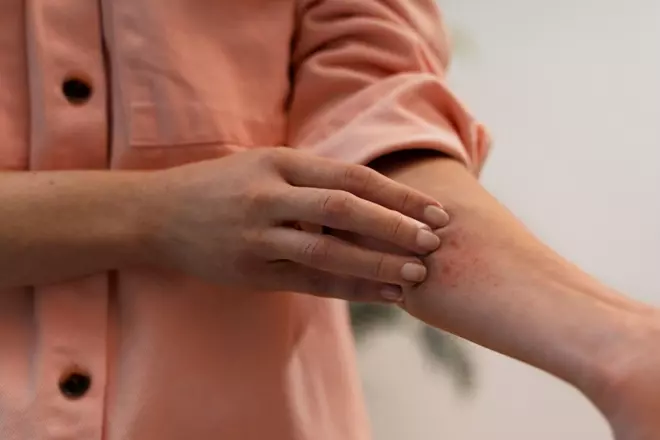
Photo Credit: by freepik, magnific.com
Ringworm & Eczema: Why They Are Often Confused
With two skin conditions that share similar symptoms but require completely different treatments, it’s important to know the difference. Eczema, or atopic dermatitis, is an inflammatory condition caused by the immune system that leads to dry, itchy, red, irritated skin. Ringworm (a misnomer, as it is actually a fungal infection) also causes itchy, red, and irritated skin. There are key differences, however, that a doctor must look out for to guide them towards the correct diagnosis and treatment. We’ll discuss those and more next.
What Is Ringworm?
Ringworm, also known as tinea, is a common skin infection caused by fungi called dermatophytes. These fungi can survive on our skin, hair, and nails and can cause an infection, leading to symptoms such as itchiness, redness, and a ring-shaped rash with central scaling and clearing. It can cause infection in many locations, including, but not limited to, the scalp (termed tinea capitis) and the body (termed tinea corporis). The specific symptoms depend on where the infection occurs in our body. Ringworm is contagious and can spread through direct contact with an infected person or animal, contaminated objects such as towels or clothing, or soil.
What Is Eczema?
Eczema, or atopic dermatitis, is a chronic skin condition that may start in early childhood and is often caused by inflammation beneath the skin's surface. The symptoms include dry, itchy, red, and irritated skin, and the location often varies by age. Eczema often affects the scalp, elbows, knees, and cheeks in infants and children. It usually affects the wrists, elbows, knees, ankles, face, and neck in adults. Over time, due to chronic itching and scratching, the skin can thicken. It is important to note that it is an inflammatory condition, not a contagious one. There are several types of eczema, all caused by specific triggers. Eczema is caused by our immune system reacting to external triggers, including, but not limited to, dry weather, fabrics, skin care products, soaps, and other environmental factors. It is a very common skin condition that affects more than 30 million Americans. Next, we’ll discuss the key differences between eczema and ringworm, including their treatments.
Ringworm vs Eczema: How Doctors Spot Key Differences
The symptoms of ringworm and eczema are quite similar, including red, itchy, irritated skin. Thus, doctors must utilize key clinical clues to guide subsequent diagnosis and treatment, underscoring the importance of seeking medical attention. One important difference is that ringworm tends to have a central, scaly clearing. However, this cannot be relied on solely, as a form of eczema called “nummular eczema” can cause a similarly appearing rash. Nummular eczema tends to affect the arms and legs more often than ringworm, which can appear on any part of the body. There will also be additional clinical clues doctors rely on, such as a known exposure to potential environmental triggers and a history of other allergic conditions, such as asthma, that may point more towards eczema. Conversely, having the following may point more towards ringworm:
• known skin-to-skin contact with an infected person
• living in a warm climate
• sharing of bedding or towels
• a rash in the groin or upper thigh associated with activities that involve sweating and close skin-to-skin contact, such as wrestling
The treatment regimens for each differ considerably: one is an infection requiring antifungal treatment, while the other is an inflammatory process requiring anti-inflammatory treatment. Therefore, it is extremely important to seek guidance from your doctor, who should diagnose your condition and select the appropriate treatment regimen for your skin. Eczema is treated stepwise depending on symptom severity.
According to the National Eczema Association, the treatment regimen includes non-pharmaceutical and pharmaceutical treatments. According to the NEA, non-pharmaceutical treatments may include, among other things, moisturizing and wet wrap therapy.
The pharmaceutical treatment of eczema begins with topical corticosteroids, with the type selected by your dermatologist depending on the severity of symptoms. These include Diprolene, among others. There are then even more potent treatment regimens if symptoms persist, including non-steroidal topical medications, phototherapy, oral prescription medications, and injectable prescription treatments.
For ringworm, the treatment involves antifungal medications, selected by your doctor based on the severity and location of symptoms. Most cases are successfully treated with topical antifungal medications. Jublia, for example, is used to treat onychomycosis, a term for fungal infection of the nails that causes them to become thickened, discolored, and brittle. If symptoms are severe and widespread, or if topical medications are ineffective, your doctor may prescribe an oral antifungal medication.
Key Takeaways
Although ringworm and eczema can cause similar symptoms, including red, itchy, and irritated skin, they are fundamentally different conditions with distinct causes and treatments. Ringworm is a contagious fungal infection that requires antifungal therapy, while eczema is a non-contagious inflammatory condition typically managed with treatments that reduce inflammation and support the skin barrier. As some forms of eczema can closely resemble ringworm, distinguishing between the two is not always straightforward. For this reason, it is important to seek evaluation from your doctor before starting any new treatments. An accurate diagnosis can help ensure that your physician identifies the underlying condition and selects the most appropriate treatment approach.
###
Your email address will not be published. Required fields are marked with *.